Fragrance Guide
The Academy
Everything you need to read a fragrance like a connoisseur — from the three-tier pyramid to accords, families, materials and the craft of wearing scent well.
The foundation
Notes & the Pyramid
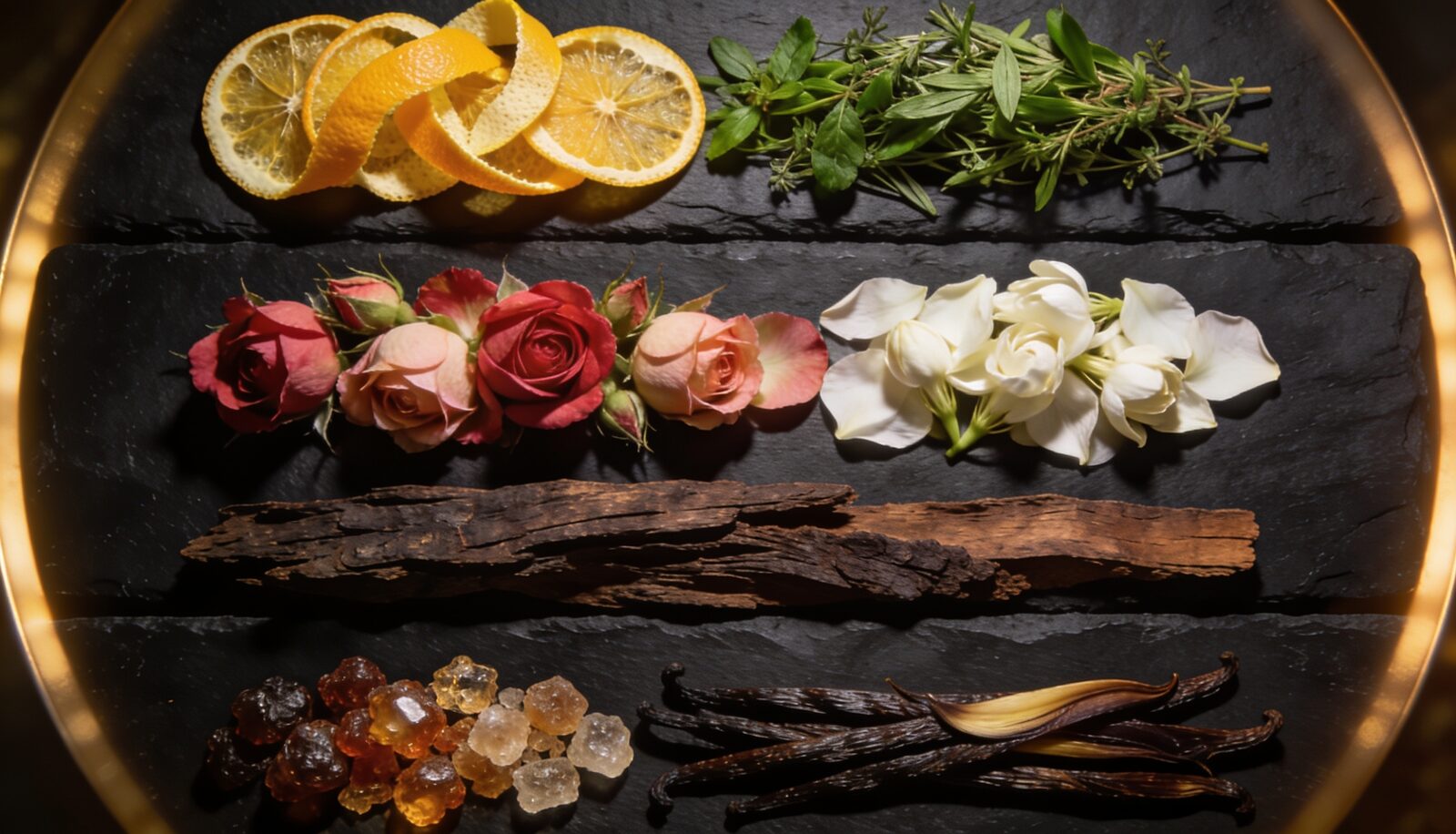
A fragrance is not one smell but a sequence. Perfumers build it in three tiers — top, heart and base — that unfold over hours as the more volatile molecules evaporate first and the heavier ones linger.
- Top notes
- The first impression — bright, volatile, gone within 15–30 minutes. Citrus, aromatic herbs and light spices live here.
- Heart notes
- The character of the scent, emerging as the top fades and lasting a few hours. Florals, fruits and rounded spices define this stage.
- Base notes
- The foundation and the trail you leave behind — woods, resins, musks, amber and vanilla. These are the slowest to evaporate and can last a full day on skin.
This evolution is why a fragrance smells different at first spray than it does at dinner — and why you should never judge a scent in the opening minute alone.
The chords of perfumery
What is an Accord?
If notes are individual instruments, an accord is a chord — several materials blended so seamlessly the nose reads them as a single, new smell.
An accord is what you actually perceive. "Amber" isn't a single ingredient — it's an accord usually built from labdanum, benzoin and vanillin. The same goes for "leather," "marine" or "oud" interpretations. Notes are the recipe; accords are the dish.
On every product page we break the scent into its main accords with a weighted profile, so you can shop by the character you'll actually smell — not just an ingredient list.
The map
Olfactive Families
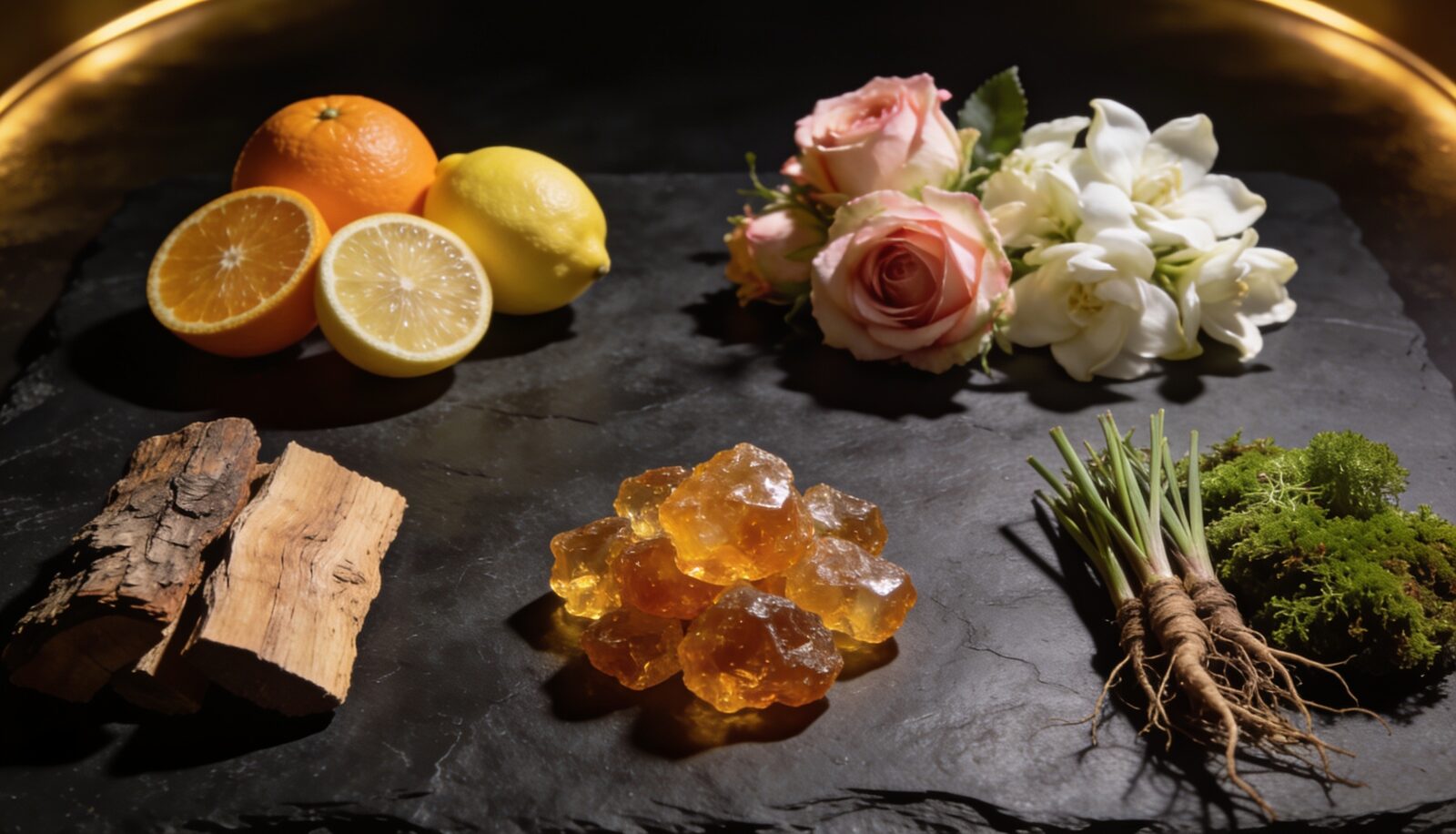
Families are the broad continents of scent. Almost everything you'll smell sits within — or between — a handful of them.
- Fresh
- Citrus, aromatic, green, aquatic and tea facets. Bright, clean and daytime — Aqua Universalis, Silver Mountain Water.
- Floral
- Rose, jasmine, tuberose, iris. The largest family — from soluminous and airy to opulent white-floral.
- Amber (Oriental)
- Warm, resinous and sweet — labdanum, benzoin, vanilla and spice. The signature of Grand Soir and Baccarat Rouge 540.
- Woody
- Sandalwood, cedar, vetiver and oud. Dry to creamy, often the backbone that gives a fragrance its gravity.
- Chypre & Fougère
- Two classic structures rather than ingredients: chypre = citrus over oakmoss and labdanum; fougère = lavender, coumarin and mossy woods.
Strength
Concentration & Oil Load
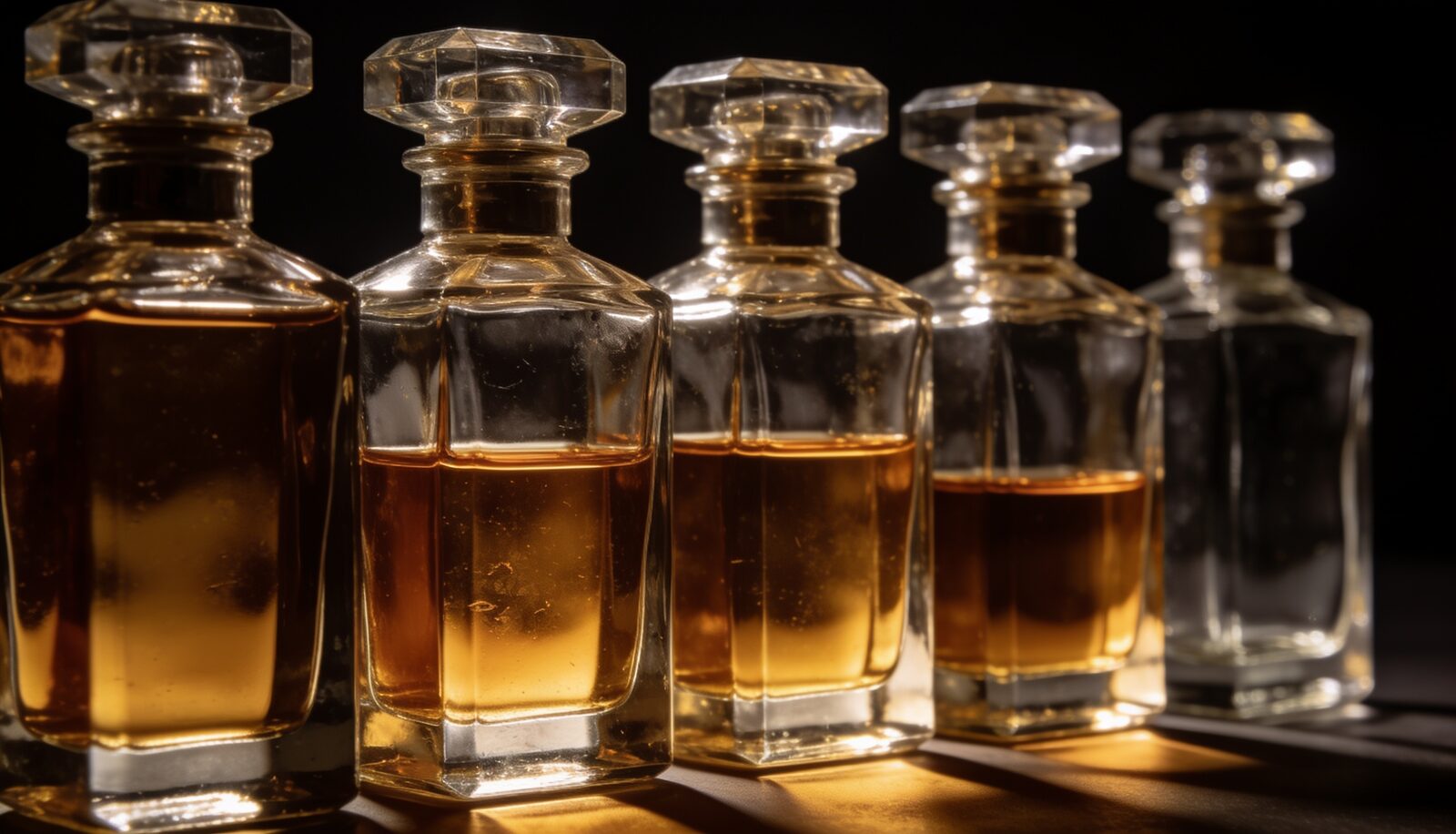
The same juice can be sold at different strengths. "Concentration" is the percentage of perfume oil in alcohol — it shapes longevity, intensity and price.
| Type | Oil % | Character | Typical wear |
|---|---|---|---|
| Parfum / Extrait | 20–40% | Richest, closest to skin | 8–12h+ |
| Eau de Parfum (EDP) | 15–20% | Full and balanced | 6–8h |
| Eau de Toilette (EDT) | 5–15% | Lighter, brighter top | 4–6h |
| Eau de Cologne (EDC) | 2–5% | Fresh, fleeting | 2–3h |
Higher concentration doesn't always mean "better" — sometimes an EDT is composed differently to feel airier on purpose. But as a rule, more oil means more depth and longer life.
The language
Performance Vocabulary
Enthusiasts use a precise vocabulary for how a fragrance behaves. A few terms worth knowing:
- Longevity
- How long the scent remains detectable on skin or fabric.
- Sillage
- The scented trail you leave as you move — pronounced "see-yazh," from the French for a ship's wake.
- Projection
- How far the scent radiates from you at a given moment — your scent bubble.
- Skin scent
- The intimate stage when a fragrance sits close, smelled only up near the skin. Many musks and soft ambers finish here.
- Scrubber
- Slang for a fragrance so unpleasant on you that you want to scrub it off — usually a chemistry mismatch, not a bad perfume.
The palette
A Glossary of Materials
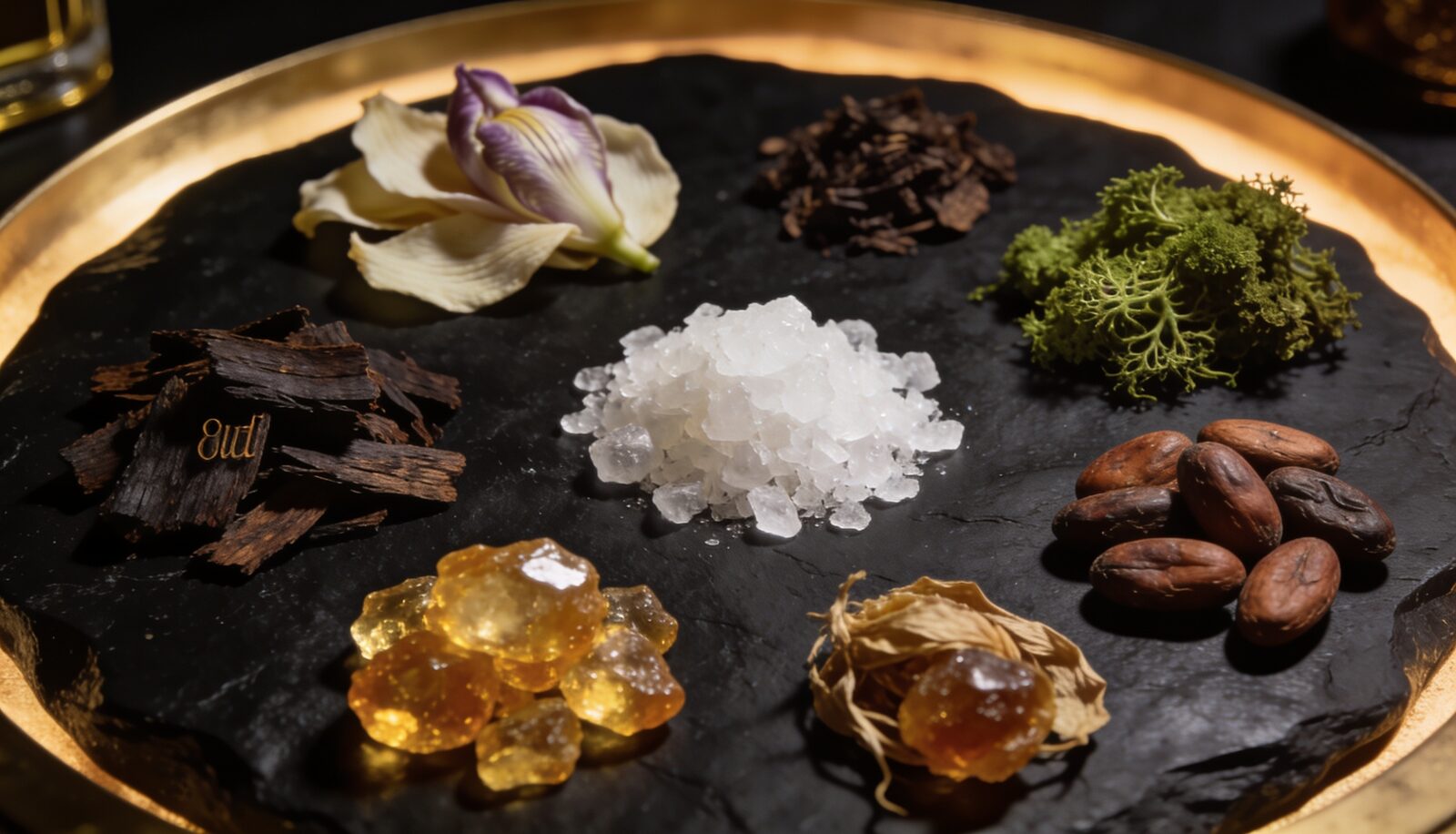
The legendary ingredients behind the scents — what they are and why perfumers prize them.
- Oud (Agarwood)
- Resinous wood from infected aquilaria trees — deep, animalic, smoky. The most expensive raw material in perfumery by weight.
- Ambergris
- A rare secretion from sperm whales, aged by the sea into a salty, warm, radiant material. Today usually recreated with Ambroxan.
- Musk
- Originally animal-derived; now clean synthetic musks give skin-like warmth, softness and that "fresh laundry" radiance.
- Iris / Orris
- From the rhizome of the iris flower, aged for years. Powdery, cool, suede-like — one of the costliest naturals.
- Oakmoss
- The damp, inky, forest-floor heart of every classic chypre. Now used in restricted, IFRA-compliant forms.
- Ambroxan
- A clean, mineral-ambergris molecule with huge radiance. The engine behind many modern "sheer power" scents.
- Tonka bean
- Rich in coumarin — almond, hay, vanilla and cinnamon facets. The cozy heart of fougères and gourmands.
- Labdanum
- A sticky resin from rockrose — leathery, balsamic, honeyed. The backbone of the amber accord.
- Rose (Damask / Taif)
- Distilled at dawn from thousands of hand-picked petals — honeyed, green and lush. Taif and Damascena roses are among perfumery's most precious florals.
- Jasmine (Sambac / Grandiflorum)
- Indolic, narcotic, intensely floral — "the king of flowers." Picked at night when its scent peaks; hundreds of blossoms yield a single drop.
- Sandalwood (Mysore)
- Creamy, milky, soft woods with a warm radiance. True Mysore sandalwood is now rare and protected, often replaced by Australian sandalwood.
- Vanilla (Bourbon)
- Sweet, balsamic and comforting — from cured orchid pods. The heart of gourmand and oriental ambers; real vanilla is costly and complex.
- Bergamot
- The sparkling citrus that opens countless fragrances — bright, zesty, faintly floral. Cold-pressed from the rind of a Calabrian citrus fruit.
- Vetiver
- Earthy, smoky, rooty grass — fresh and dark at once. Haitian vetiver is cleaner, Javanese smokier. A backbone of masculine and chypre scents.
- Patchouli
- Dark, damp, chocolatey earth — divisive but essential. Modern purified fractions strip the muddiness, leaving a velvety depth.
- Saffron
- Leathery, suede-like, faintly metallic spice — the signature opener of modern oud and amber compositions.
- Frankincense (Olibanum)
- Sacred resin burned for millennia — cool, lemony, peppery and meditative. Lends a luminous, smoky aura to ambers and woods.
Architecture
Sophisticated Structures
Beyond families, certain blueprints recur across the great fragrances. Recognising them deepens how you read any scent.
- Fougère
- "Fern" in French — lavender, coumarin (tonka) and oakmoss. The template of classic masculine perfumery.
- Chypre
- Bergamot top over an oakmoss–labdanum–patchouli base. Elegant, mossy, sophisticated — Gris Dior is a modern chypre.
- Gourmand
- Edible accords — vanilla, caramel, chocolate, coffee. Dessert made wearable, as in Xerjoff Lira.
- Aldehydic
- Aldehydes add a soapy, sparkling, abstract lift — the "champagne fizz" famously atop Chanel's florals.
- Amber / Oriental
- Warm resins, spice and vanilla woven into a glowing, sensual whole — the language of evening fragrance.
The craft of wearing
How to Wear & Test
A great fragrance rewards a little knowledge. A few principles the connoisseurs live by:
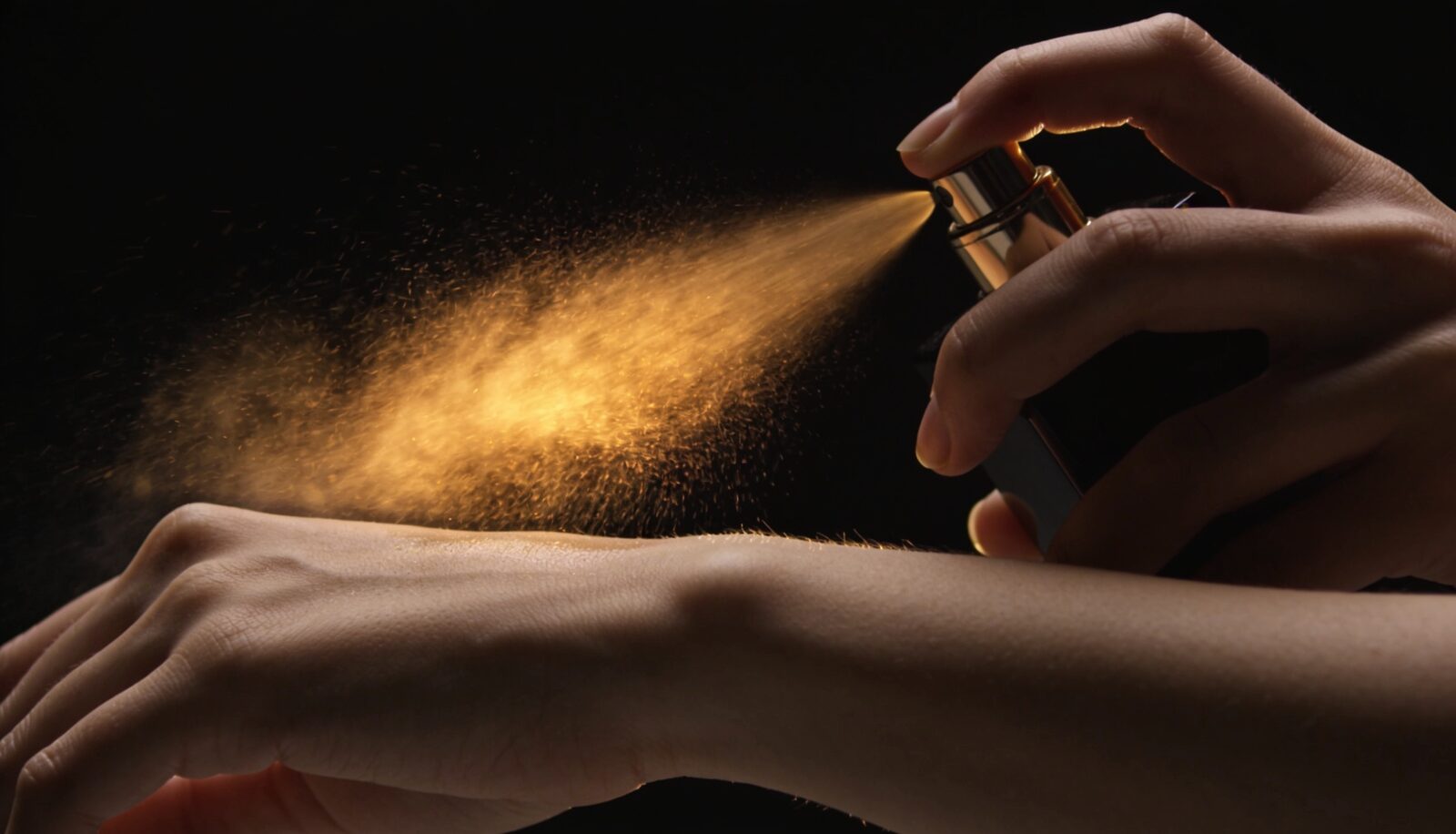
- Apply to pulse points
- Wrists, neck and behind the ears — warmth there lifts the scent and helps it diffuse.
- Never rub your wrists
- Rubbing crushes the delicate top notes and distorts the development. Spray and let it dry.
- Test on skin, give it time
- Paper strips show the notes but not the chemistry. Live with it for a few hours before judging.
- Mind scent fatigue
- Your nose adapts and stops noticing your own scent (anosmia). It's still there — resist over-applying.
- Layer with intention
- An unscented or musky base can extend a fragrance. Pair complementary accords rather than clashing ones.
- Read the batch code
- Every genuine bottle carries a batch code that verifies authenticity and production date. We keep it on the box.